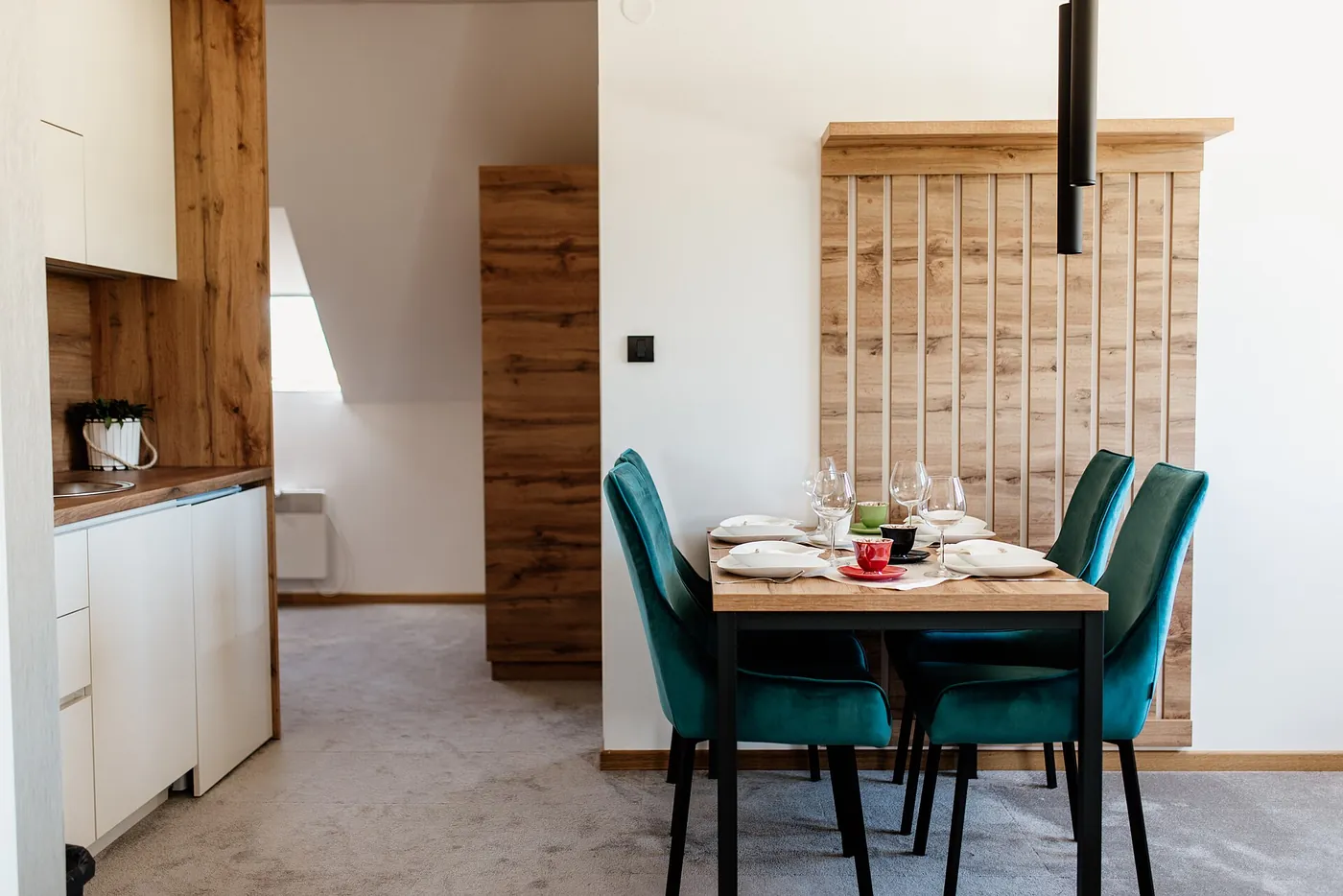
Cabinets, counters, plumbing and layout — redesigned around how your family actually cooks, and priced in a written BOQ before work begins.
💬 Book on WhatsAppThe Pakistani kitchen works harder than any room in the house. It handles desi cooking at full flame — oil, steam, pressure cookers, atta dust — three times a day, in Karachi heat. A kitchen designed for gentle weekend baking fails here within a year: swollen cabinet doors, stained counters, a hob area blackened beyond cleaning.
Money first, as always on this site. A focused standard kitchen renovation in Karachi — new cabinets and a counter upgrade — runs about Rs 5–10 lakh. A premium full-kitchen project with imported appliances, custom stone and utility relocation runs Rs 20–50 lakh and beyond. Simpler refreshes (doors, hardware, counter only) can start near Rs 3 lakh. Timelines run 3–6 weeks, stretching to two months when layouts move or imported items are involved. Your BOQ fixes your number and your schedule in writing.
The two decisions that decide whether a Karachi kitchen survives are ventilation and surfaces. A proper chimney with real extraction — ducted out, not a recirculating toy — keeps oil off your cabinets and ceiling. Counters need to tolerate hot pots set down in a hurry and turmeric that stains everything it touches; that is why most of our standard kitchens use granite or quartz rather than delicate surfaces that belong in a showroom.
Storage is the third. Pakistani kitchens store atta, rice, daals and oil in bulk, plus the daig and karahi collection no European catalogue plans for. We measure your actual pots before designing a single cabinet. Tall units for bulk storage, deep drawers for heavy vessels, and a dedicated spot for the water dispenser and the second fridge if your family runs one — these details are the difference between a kitchen that photographs well and one that works at 7 pm on a weekday.

At the standard band, the money typically covers a full cabinet run in laminated or melamine board with quality hardware, a granite or quartz counter, a new sink and mixer, hob and chimney installation, tiled splashback, and the plumbing and electrical adjustments the new layout needs. Cabinet carcasses get moisture-resistant treatment because Karachi kitchens — especially in Clifton and DHA's sea-facing blocks — live with salt air that eats cheap board from the inside.
The premium band buys solid wood or imported finishes, branded built-in appliances, custom stone with waterfall edges, under-cabinet lighting systems and layout changes that move plumbing and gas lines. Both bands get the same discipline from us: named materials in the BOQ, hardware brands written down (soft-close hinges are where cheap quotes quietly save), and stage photos before the counters cover everything up.

Moving a sink or a gas point costs real money — new plumbing runs, possibly society permission in flats, and days added to the schedule. It is worth it when the current layout forces the cook to cross the kitchen carrying hot oil, or when the fridge door opens into the only walkway. It is not worth it for a magazine photograph.
At the survey we will tell you plainly which category your kitchen falls into. Many Karachi kitchens — especially in 1990s PECHS and Gulshan flats — need no layout change at all; they need cabinets that fit the room, a counter at the right height and extraction that works. That honesty is built into the model: our fee is a percentage of a BOQ we have to justify line by line, so inflating your project does not pay us quietly — it just gets argued with, in writing, by you.

Week one is measurement, design finalisation and ordering — cabinets are fabricated off-site, which is why a kitchen can be installed faster than people expect. Then strip-out, plumbing and electrical rough-in, tiling, cabinet installation, counter templating and fitting, appliances and snagging. You get photos at each stage and release payments stage by stage.
One practical warning every Karachi family needs: plan the cooking gap. During the middle week you will have no working kitchen. Families in houses often set up a temporary stove on the terrace; flat owners usually rely on family nearby or a week of eating out. We schedule the dusty, kitchen-less days as tightly as possible and tell you the exact dates in advance — no surprises on a Friday night.

A kitchen renovation succeeds or fails at the points list, long before the cabinets arrive. Gas: hob position, a safe routed line, and a shut-off you can reach. Water: sink supply and waste, RO or filter point, dishwasher point if planned, and the dispenser line families forget until the fridge arrives. Power: dedicated circuits for the oven, microwave, kettle and fridge — older Karachi kitchens often run everything off one ageing circuit, which is why breakers trip at iftar.
Every one of these points is cheaper to place during rough-in than after tiling — by an order of magnitude. Our survey walks your cooking routine with you: where the atta lives, where the hot pot lands, which side the fridge door should open. The points list in your BOQ is that conversation, written down and priced, so the finished kitchen fits the cook instead of the catalogue.

Owners often ask why one neighbour's kitchen cost Rs 7 lakh and another's Rs 30 lakh. The drivers, in order of impact: cabinet material and finish (laminate and melamine at standard; solid wood, acrylic and imported finishes at premium), appliances (a local hob and chimney versus imported built-ins), stone (local granite versus imported quartz and marble with custom edges), and layout change (moving gas and plumbing is skilled, slow work). Hardware and lighting add smaller but real amounts — soft-close everything and layered lighting are standard in premium kitchens and options in standard ones.
None of these choices is wrong; they are wrong only when they are made unknowingly. Your BOQ prices the standard specification fully, then shows premium alternatives as separate visible lines. Families regularly mix: standard cabinets, premium stone, mid appliances. That mix-and-match is impossible inside a lump-sum quote — and effortless inside an itemised one.

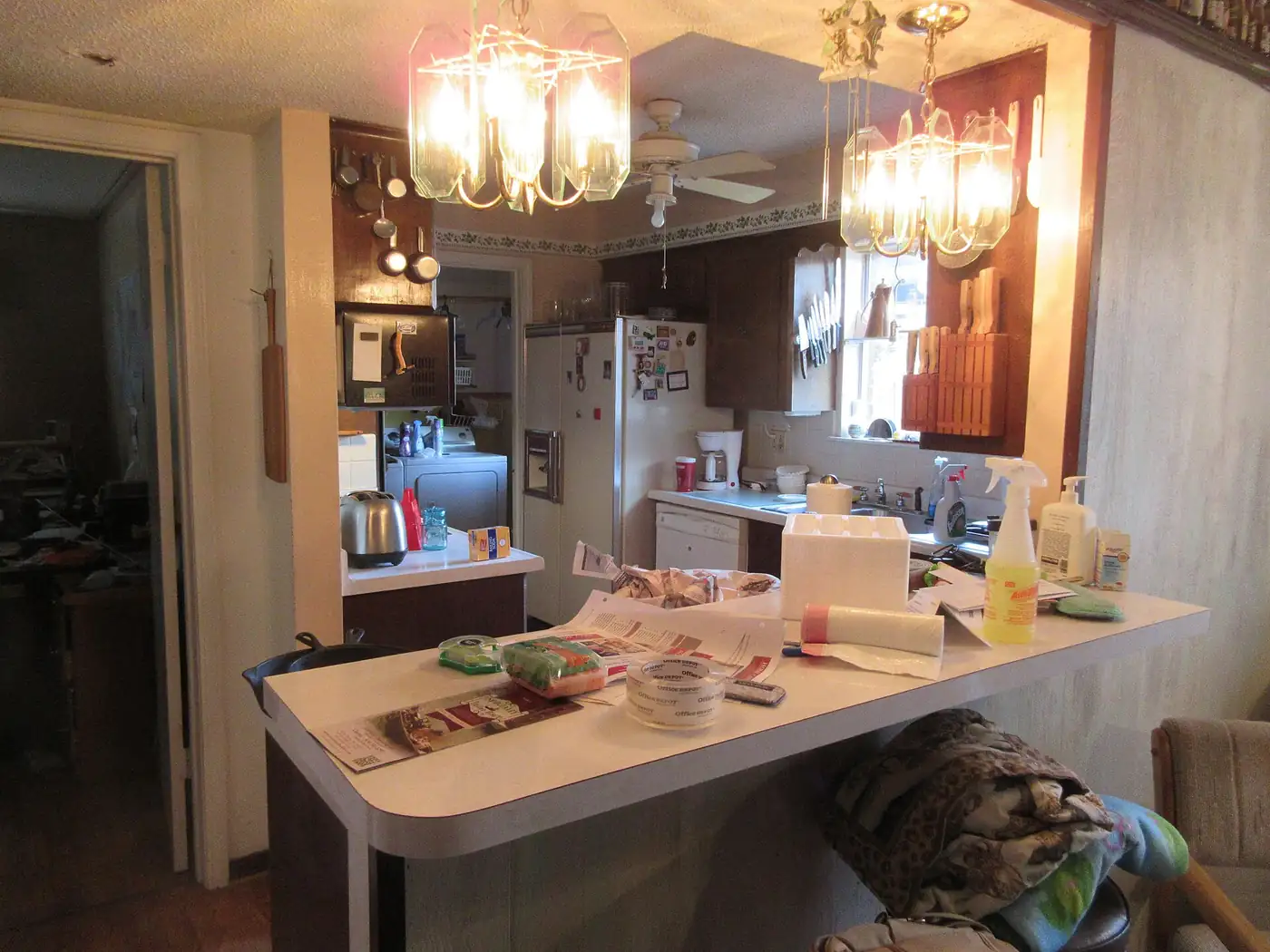
Dated cabinets, no real extraction and a layout from another decade. Oil film on every surface, doors swollen from steam, and never enough counter space.

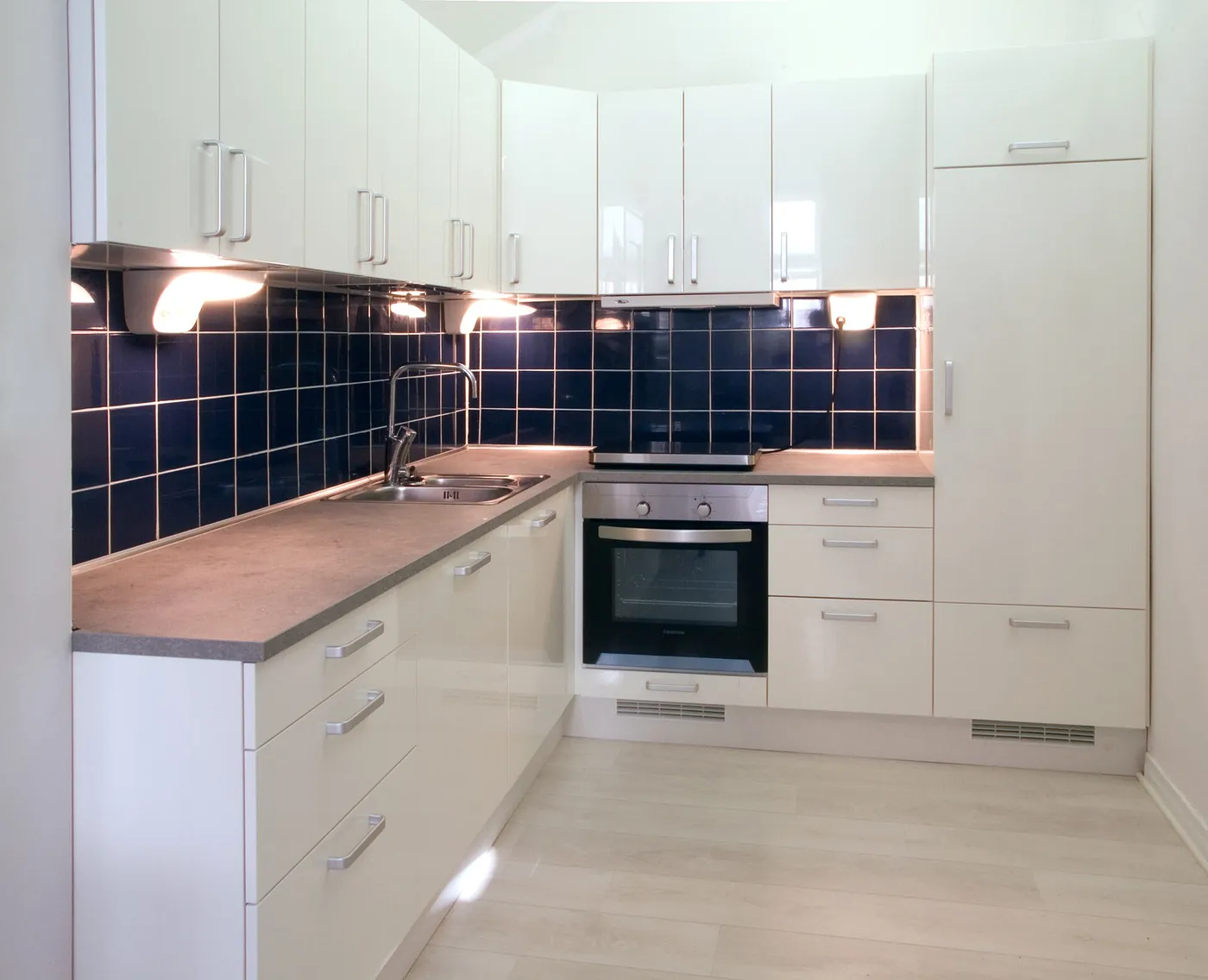
New moisture-resistant cabinets, a ducted chimney, stone counters and lighting that reaches the work surface — designed around bulk storage and full-flame cooking.
A focused standard renovation — cabinets and counter upgrade — runs about Rs 5–10 lakh in published Karachi guides. A premium full kitchen with imported appliances and custom stone runs Rs 20–50 lakh or more. A light refresh of doors, hardware and counter can start near Rs 3 lakh. Your BOQ, written after measuring your kitchen, is the number we are held to.
Typically 3–6 weeks from strip-out to handover. Cabinet fabrication happens off-site in the first phase; layout changes that move plumbing or gas, and imported appliances or stone, can stretch a project towards two months. The stage schedule in your BOQ shows the dates before you sign.
Granite and quartz are the workhorses: both tolerate hot pots, oil and turmeric far better than marble or laminate worktops. Marble stains and etches with lemon and vinegar — common in our cooking — so we steer family kitchens away from it unless the owner accepts the upkeep knowingly.
Yes — most kitchens we price need no layout change. New cabinets fitted to the room, proper extraction, a stone counter and better lighting transform the space without moving a single pipe. If a layout change would genuinely help, we will show you why and price it as a separate visible line so you can accept or drop it.
Cabinets are fabricated to your room's measurements by our partner workshops, to the materials and hardware named in the BOQ. Ready-made modules rarely fit older Karachi kitchens — rooms are seldom square and columns land where they land — so measured fabrication is what gives you full-height, no-wasted-corner storage.
There is usually one week in the middle with no working kitchen. We tell you those dates in the stage plan so you can arrange alternatives — a temporary terrace setup in a house, or family and eating out for flat owners. The strip-out and installation days are scheduled tightly to keep that gap as short as the work allows.
For desi cooking, a ducted chimney sized to your hob makes a visible difference: oil vapour is captured at the source instead of settling on cabinets and ceilings. An exhaust fan helps but moves far less air across the cooking surface. If budget forces a choice, we would rather you spend on extraction than on a decorative splashback — your cabinets will thank you for years.

Send us photos of your property on WhatsApp. We reply during working hours, book your free survey, and put every price in writing before any work begins.
💬 Book on WhatsApp